
Renovating
Which works actually come back in the sale price
The question comes up at every valuation: “if I redo the kitchen, how much do I get back?” The honest answer is rarely the hoped-for one, and it depends above all on the nature of the work.

One general principle before the detail: work that removes an objection adds value. Work that adds an amenity adds little, because it reflects your taste and not the buyer's.
What comes back well
Everything to do with the building envelope
Roof, structure, facade, external joinery, services. None of it makes anyone dream, but it is the first source of downward negotiation. A roof renewed with an invoice and a ten-year guarantee removes an argument from the buyer and reassures them about the general upkeep of the property.
Energy improvement, when it changes the rating
Now that the energy certificate is legally binding and governs whether a property can be let, moving from a poor rating to an acceptable one has a direct, measurable effect on demand. Note the nuance: what counts is work that actually changes the letter, not isolated improvements. An energy audit beforehand avoids spending without crossing a threshold.
Bringing private drainage up to standard
In areas on private drainage, very common in the central Var, an inspected and compliant system avoids both a discount and a systematic negotiation. It is probably the best ratio between money spent and effect on price.
What comes back poorly
A high-end kitchen or bathroom
A clean, functional, neutral kitchen helps a property sell. A bespoke kitchen at a very high budget comes back only in part: a buyer who dislikes the style treats it as something to replace, not as added value. The rule is to bring it up to standard, not to over-specify.
The swimming pool
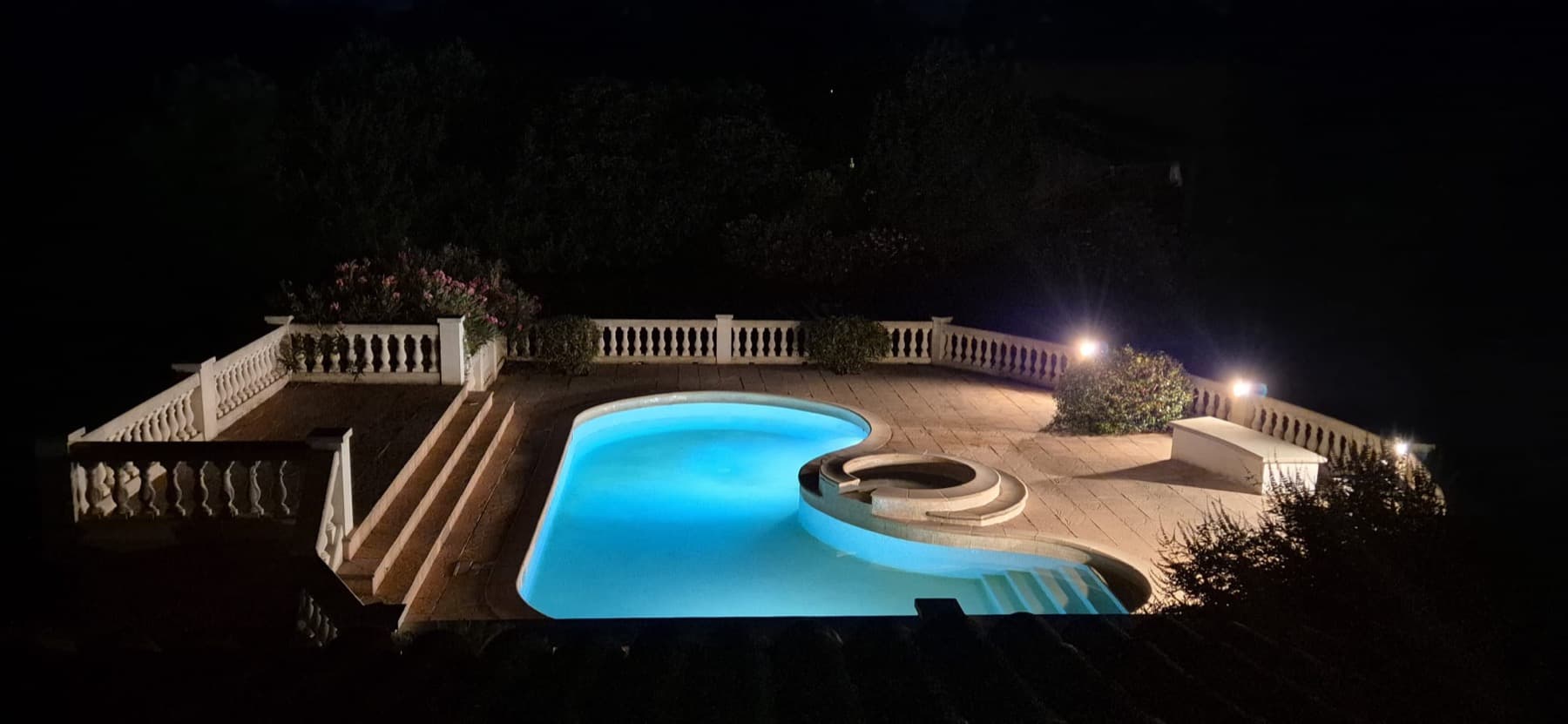
Counter-intuitive in this region, where almost everyone wants one. A pool built just before selling adds noticeably less than it cost, because it comes with maintenance, a revised property tax and sometimes safety and planning obligations. On the other hand, the absence of a pool on a property whose plot cannot take one is a genuine discount in this market: what counts is the possible pool as much as the existing one.
Highly personal alterations
An unusual conservatory, bespoke partitioning, strongly styled decoration, elaborate landscaping. These tend to narrow the pool of buyers rather than widen it.
What about solar panels?
Their effect on price depends entirely on the arrangement. An installation owned outright, correctly sized for self-consumption, with its invoices and guarantee, reads as an asset. One under a lease or a long-term finance agreement transfers an obligation to the buyer, and becomes a point of negotiation.
In every case, gather the contracts, the compliance certificates and the generation history before going to market. Missing paperwork turns equipment into uncertainty.
What to do in the months before selling
- Deal with what shows and costs little: neutral paintwork, sealant, lighting, tidy outside spaces, statutory vegetation clearance.
- Gather invoices and guarantees for work already done — undocumented work does not add value.
- Commission the surveys early rather than at the last minute, so you learn the objections before the buyer does.
- Get major works quoted without necessarily carrying them out: a builder's quote lets you negotiate on an objective basis instead of absorbing the buyer's inflated estimate.
That last method is often the most profitable. A buyer who discovers a defect always estimates generously; a seller who produces a quote frames the discussion.