
Market
The Var and the Riviera: a two-speed market
Talking about “the Var property market” does not mean very much. A two-bedroom flat with a sea view in Saint-Raphaël and a mas in Flassans-sur-Issole share almost none of the same price mechanics.

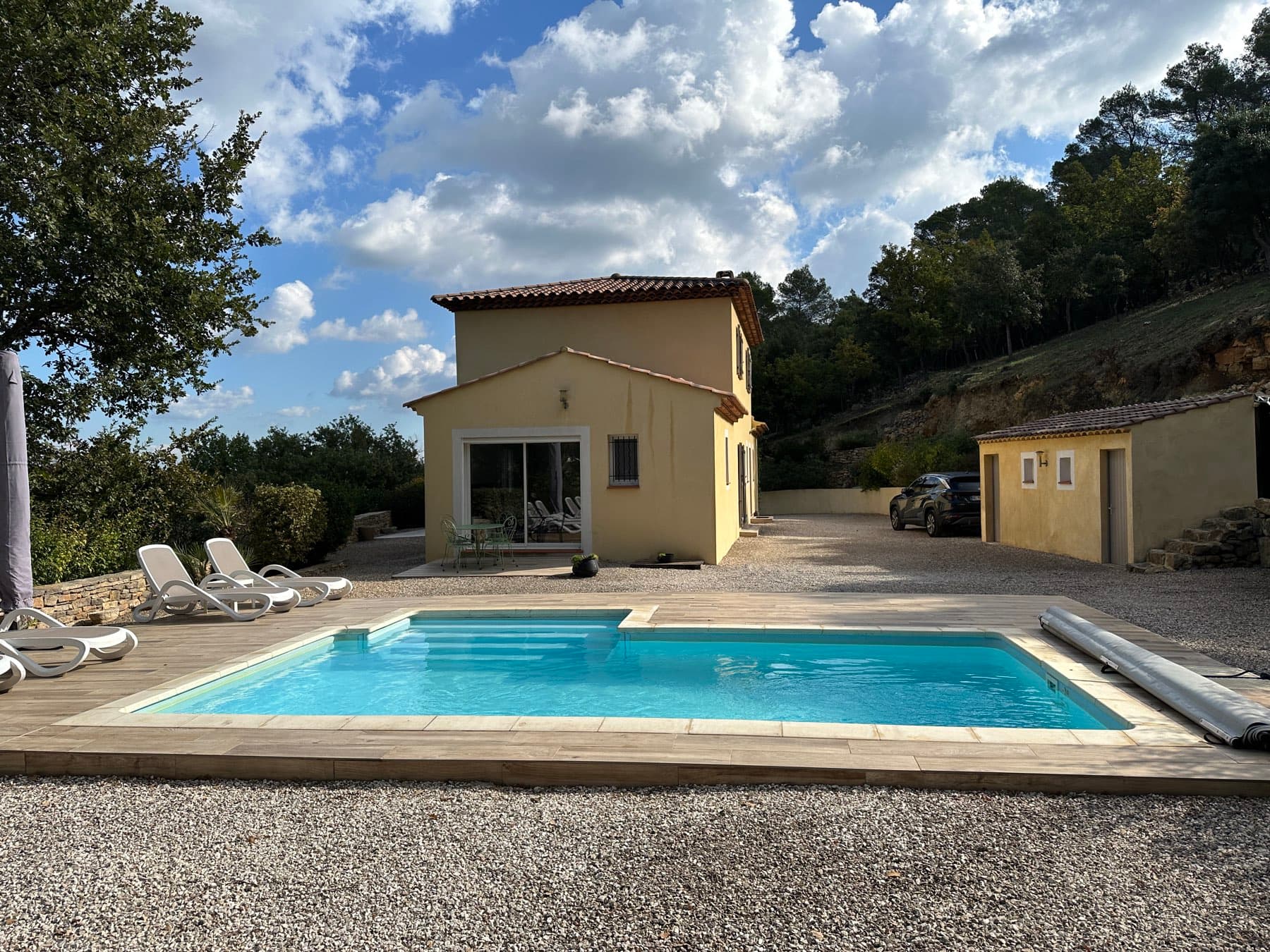
Why don't the coast and the hinterland follow the same curve?
Along the coast, from Cannes to Saint-Raphaël, a large share of buyers are purchasing a second home or an investment. They depend far less on borrowing than first-time buyers: when rates rise they postpone, they negotiate, but they do not leave the market. Supply is also structurally constrained, by geography and by restrictive planning documents. The result is that asking prices move slowly even when transaction volumes fall sharply.
In the heart of the Var, around Le Luc, Flassans, Besse and Le Cannet-des-Maures, the buyer profile is different. These are mostly main residences, mortgage-financed, often bought by households leaving the coast or the Alpes-Maritimes to gain space. That clientele is directly exposed to the cost of credit. When borrowing power contracts, demand shifts towards the lower end of the range and the hinterland's higher-value properties settle into a long negotiation.
Hence the two-speed impression: the coast holds its prices but sells more slowly, while the hinterland keeps its volume on affordable properties and watches selling times stretch on everything else.
What actually sets the price of a property here?
For equal floor area in the same commune, the price gaps almost always come down to the same criteria. In decreasing order of impact, based on what I see on the ground:
- The view and the aspect. On the coast, moving from an open view to a partial one costs more than ten extra square metres.
- Genuine quiet, checked on site at different times of day. Proximity to a road or a through route rarely shows in photographs and always shows on the second viewing.
- The condition of the roof, the drainage and the joinery. These are the three items that turn a negotiation into a renegotiation once the surveys come back.
- The quality of the plot: flat or terraced, planted or bare, with room to extend or built out under the local plan.
- The energy rating, whose effect on price has sharpened considerably now that it is legally binding and governs whether a property can be let at all.
How do you place your own property honestly?
The method I apply is always the same, and it does not start from advertised prices. It starts from sales that have actually completed on comparable properties, within a tight radius and over a recent period. That data is public: the French tax authority publishes a register of property transfers, free to consult online, listing each recorded transaction with its price, floor area and date.
The gap between the price advertised on the portals and the price actually recorded at completion is the single most useful figure to know before setting an asking price. It is also the one nobody wants to hear when it goes against them.
What this means in practice
If you are selling on the coast
The risk is not selling too low, it is not selling at all. A correctly positioned property finds a buyer; one priced ten per cent too high stays online, goes stale, and eventually sells below its real value after a series of reductions. The opening price matters more than how long you are prepared to wait.
If you are selling in the hinterland
Competition is direct and legible: your buyer is comparing three or four similar properties within a ten-mile radius. What decides it are the objective elements — actual condition, running costs, energy performance, absence of work to be done. Surveys obtained early and builders' quotes already in hand are worth more than a last-minute discount.
If you are buying
The two markets do not offer the same room to negotiate, and it cannot be guessed from a listing. It is inferred from the date the property came online, the history of price reductions, and the seller's situation. That information is hard for a buyer to obtain alone, and it determines most of the outcome.